How to Choose a Futures Prop Firm in 2026: 7 Things to Check Before You PayCómo elegir una prop firm de futuros en 2026: 7 cosas que revisar antes de pagar
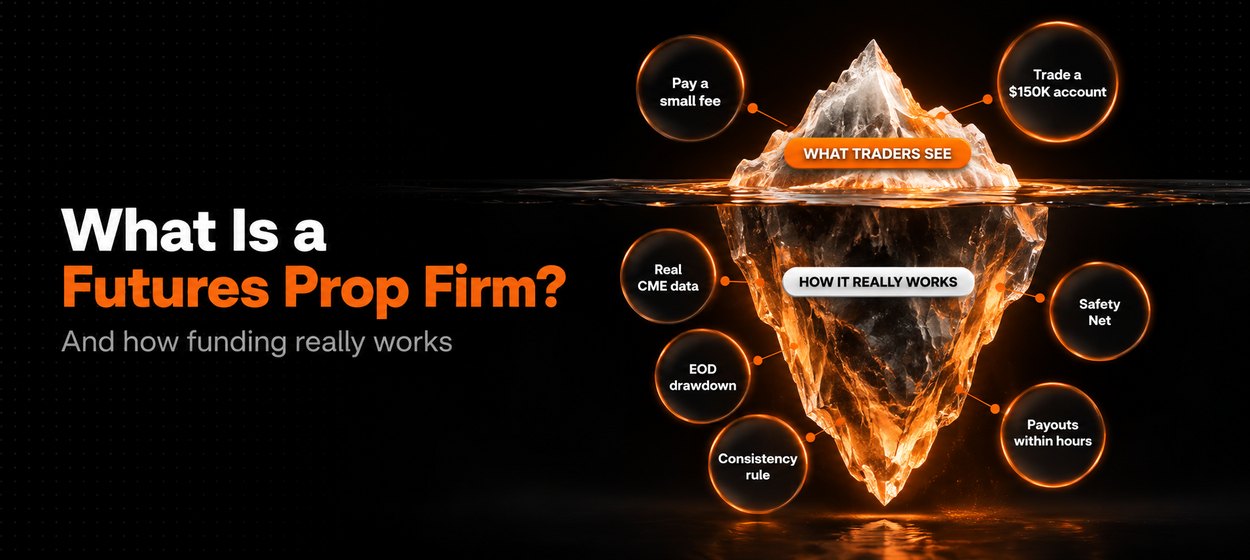
A futures prop firm challenge is cheap compared with funding your own account, but it is not free. Most traders who lose money in this industry do not lose it to the market: they lose it to rules they did not read. Before you pay for any evaluation, here are the seven things worth checking.
Already know what you want? Create your Ftytrade account and pick your challenge.
Quick summary
- Drawdown type: end-of-day (EOD) is far more forgiving than intraday trailing.
- Total cost to funded: evaluation + resets + activation. Not just the headline price.
- Payout rules: safety net, minimum payout, frequency and split.
- Consistency rule: know the percentage and how it is calculated.
- Platforms and data: real CME data and the platform you already use.
- Transparency: every rule public before you pay.
- Support: humans, 24/7, in your language.
1. What kind of drawdown is it?
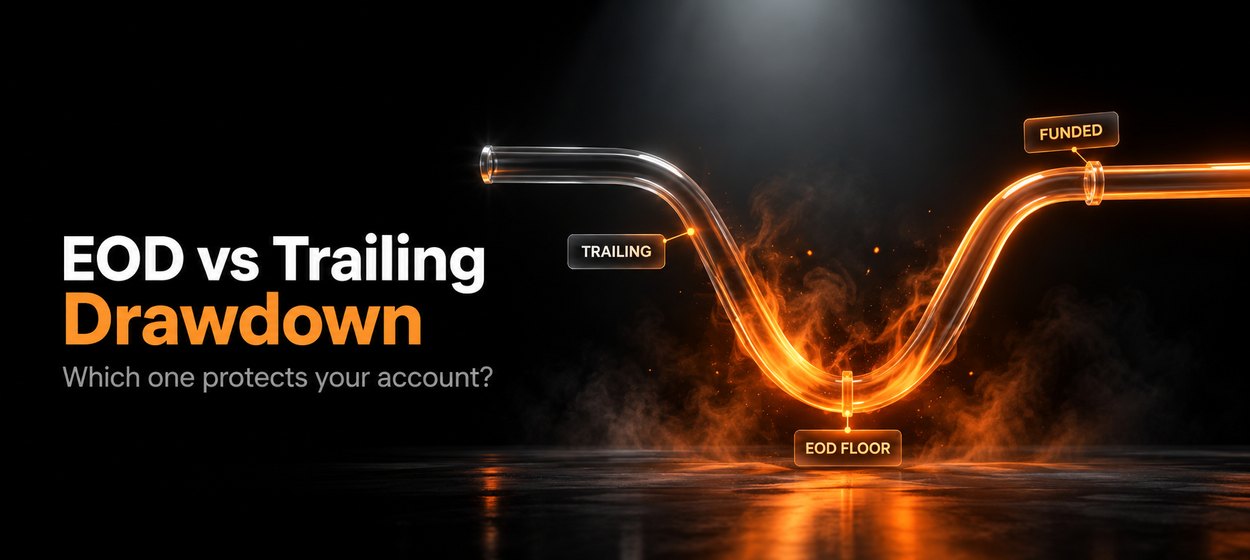
This is the single most important rule. A trailing intraday drawdown follows your open profit tick by tick: a trade that goes up $1,500 and comes back to breakeven has permanently raised your floor. An end-of-day (EOD) drawdown is only calculated at the close of each trading day, so intraday swings do not breach it. Ftytrade uses EOD drawdown on every program for exactly this reason: it rewards the trade you actually closed, not the one you almost had.
2. What does it really cost to get funded?
Add up the whole path: the evaluation fee, the resets you might need, and the activation fee when you pass. A $29 monthly challenge with a reasonable activation fee is often cheaper than a "one-time" price that hides mandatory resets. Our pricing is published on the home page for every account size, with the activation fee shown next to it.
3. How do payouts actually work?
Read the payout section twice. Look for: the safety net (profit buffer before the first payout), the minimum payout, how often you can request one, the profit split and how long processing takes. At Ftytrade, payouts are processed within hours and the rules are the same on the website, in your dashboard and in the Terms.
4. Is there a consistency rule, and how is it measured?
A consistency rule says your single best day cannot represent more than a set percentage of your total profit. It exists to stop one lucky trade from passing an evaluation. The important questions are: what is the percentage, is it applied in the challenge, in the funded phase or both, and can you simply keep trading to fix it? (At Ftytrade: 40%, and yes, you keep trading until your best day is under the limit.)
5. Which platforms and which market data?
You should be able to trade on the platform you already know, with real exchange data. Ftytrade accounts connect with your own credentials to professional platforms through Rithmic, so your charts, fills and P&L match what the market actually did.
6. Are the rules public before you pay?
If you cannot find the full rule set without creating an account, that is a warning sign. Every Ftytrade rule has an info tooltip on the challenge selector, and the same figures appear in the dashboard the moment your account is created.
7. Who answers when something goes wrong?
Funded trading is a long relationship. Check whether support is human, whether it is available during market hours and in your language, and how fast it replies. Ftytrade support is human + AI, 24/7, in any language, from inside your dashboard.
Checklist before you pay
- Drawdown: EOD, and I know the percentage.
- Cost: I know evaluation + reset + activation for my size.
- Payouts: safety net, minimum, frequency and split are clear.
- Consistency: I know the percentage and where it applies.
- Platform: mine is supported with real data.
- Rules: I read them all before paying.
- Support: I know how to reach a human.
If every box is ticked, you are ready. Pick your account size and start your challenge today.
Un challenge de una prop firm de futuros es barato comparado con fondear tu propia cuenta, pero no es gratis. La mayoría de traders que pierden dinero en este sector no lo pierden contra el mercado: lo pierden contra reglas que no leyeron. Antes de pagar cualquier evaluación, estas son las siete cosas que conviene revisar.
¿Ya sabes lo que quieres? Crea tu cuenta Ftytrade y elige tu challenge.
Resumen rápido
- Tipo de drawdown: el de fin de día (EOD) es mucho más tolerante que el trailing intradía.
- Coste total hasta el fondeo: evaluación + resets + activación. No solo el precio de portada.
- Reglas de payout: Safety Net, payout mínimo, frecuencia y split.
- Regla de consistencia: conoce el porcentaje y cómo se calcula.
- Plataformas y datos: datos reales del CME y la plataforma que ya usas.
- Transparencia: todas las reglas públicas antes de pagar.
- Soporte: humanos, 24/7, en tu idioma.
1. ¿Qué tipo de drawdown es?
Es la regla más importante de todas. Un drawdown trailing intradía sigue tu beneficio abierto tick a tick: una operación que sube $1.500 y vuelve a cero ha subido tu suelo para siempre. Un drawdown de fin de día (EOD) solo se calcula al cierre de cada jornada, así que los movimientos dentro del día no lo rompen. Ftytrade usa drawdown EOD en todos sus programas precisamente por eso: premia la operación que realmente cerraste, no la que casi tuviste.
2. ¿Cuánto cuesta de verdad llegar al fondeo?
Suma todo el camino: la cuota de evaluación, los resets que puedas necesitar y la cuota de activación al pasar. Un challenge de $29 al mes con una activación razonable suele salir más barato que un "pago único" que esconde resets obligatorios. Nuestros precios están publicados en la página principal para cada tamaño de cuenta, con la activación al lado.
3. ¿Cómo funcionan realmente los payouts?
Lee la sección de payouts dos veces. Busca: el Safety Net (colchón de beneficio antes del primer payout), el payout mínimo, cada cuánto puedes pedirlo, el profit split y cuánto tarda el proceso. En Ftytrade los payouts se procesan en cuestión de horas y las reglas son las mismas en la web, en tu dashboard y en los Términos.
4. ¿Hay regla de consistencia y cómo se mide?
Una regla de consistencia dice que tu mejor día no puede representar más de un porcentaje de tu beneficio total. Existe para evitar que una sola operación afortunada pase una evaluación. Las preguntas importantes son: cuál es el porcentaje, si aplica en el challenge, en la fase Funded o en ambas, y si puedes simplemente seguir operando para corregirlo. (En Ftytrade: 40%, y sí, sigues operando hasta que tu mejor día quede por debajo del límite.)
5. ¿Qué plataformas y qué datos de mercado?
Deberías poder operar en la plataforma que ya conoces, con datos reales del exchange. Las cuentas Ftytrade se conectan con tus propias credenciales a plataformas profesionales a través de Rithmic, así que tus gráficos, ejecuciones y P&L coinciden con lo que hizo el mercado.
6. ¿Las reglas son públicas antes de pagar?
Si no puedes encontrar el conjunto completo de reglas sin crear una cuenta, es una señal de alerta. Cada regla de Ftytrade tiene un tooltip informativo en el selector de challenge, y las mismas cifras aparecen en el dashboard en cuanto se crea tu cuenta.
7. ¿Quién responde cuando algo falla?
El trading fondeado es una relación larga. Comprueba si el soporte es humano, si está disponible en horario de mercado y en tu idioma, y cuánto tarda en responder. El soporte de Ftytrade es humano + IA, 24/7, en cualquier idioma, desde dentro de tu dashboard.
Checklist antes de pagar
- Drawdown: EOD, y conozco el porcentaje.
- Coste: sé cuánto es evaluación + reset + activación para mi tamaño.
- Payouts: Safety Net, mínimo, frecuencia y split están claros.
- Consistencia: conozco el porcentaje y dónde aplica.
- Plataforma: la mía está soportada con datos reales.
- Reglas: las leí todas antes de pagar.
- Soporte: sé cómo llegar a un humano.
Si todas las casillas están marcadas, estás listo. Elige el tamaño de tu cuenta y empieza tu challenge hoy.